Showing posts with label positive dog training. Show all posts

Saturday, October 14, 2017

IMPROVING YOUR DOGS RECALL MAY BE EASIER THAN YOU THINK

MEET BELLA

This is Bella, a 4 month old GoldenDoodle who has been staying with me for a few weeks to work on some Puppy HeadStart basics. In this video, she is practicing her off leash recall. She starts chasing a toy and is able to stop mid-chase and return to me.
Come should always be a fun and positive experience for your dog. Too often we use it gruffly once we get exasperated or to mean something the dog finds negative. We call them to COME when we want them to stop playing, to come inside, to go in their kennel, to take a bath - and all of these things can lead to a sluggish or even non-existent recall.
Think of it this way. Let's say you suddenly had a new boss at work.
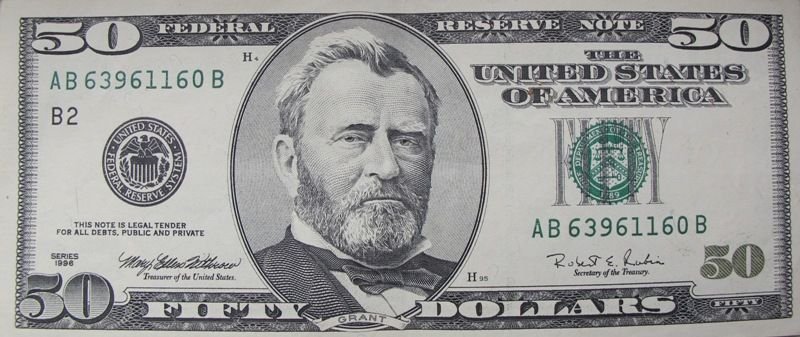
One day, they call you into their office. When you get there, they give you a $50 bonus and tell you they really appreciate all your hard work. The next day, it happens again. The next week, again. You very quickly start looking for ways to get their attention through the behavior they have been rewarding and head to the office quickly and happily when you hear your name. I mean - who wouldn't - you are getting praise and recognition for your efforts and a bonus that is high value to you.
IMG_3185.JPG
Dogs are no different - when we recognize and reward the behavior we like, we cause it to increase in frequency and reliability.
Now say you have the same scenario except half the time this happens and the other half is them giving you a task you dislike or telling you that you are not meeting their expectations. Now you start checking their body language when they call you, listening to tone, looking at their face...you go, but it is a much slower process. You likely still do what they ask for fear of repercussions (in dog training terms that would be a correction for not coming) but you can't trust the situation.
What if this same thing happened but you only ever got criticized or given tasks that you hated? Your efforts were never recognized and you experienced a physical cringe at the sound of your name... Some dogs feel this way about COME.
So how do we change that? It's actually quite simple.
Fullscreen capture 2142017 85917 PM.bmp.jpg
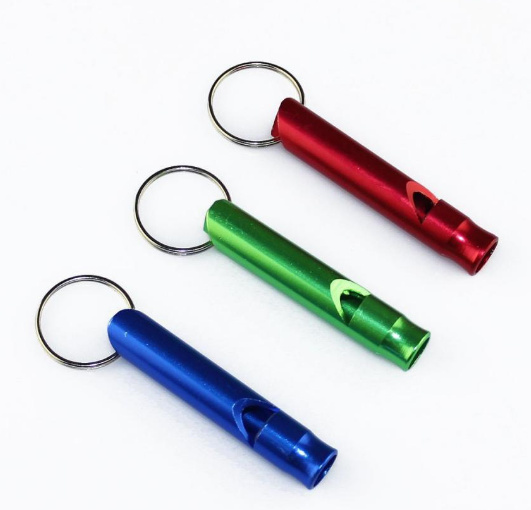
I use a whistle for my students because:
  • They cannot get gruff verbally with it.
  • It is a sound the dog usually has no preconceived feelings about so it is easy to set it as a positive only in their mind.
  • The sound carries well over a distance even in windy weather so you don't have to feel like you're yelling.
You start by simply deciding what sound you want to use - in my case I use 3 short pulses for COME. Some people use a mouth whistle, clap their hands, pat their legs or other sounds. I do find that those do not tend to carry sound as well outside but certainly use whatever is most comfortable for you. I tend to hand clap indoors and whistle outside.
Starting in a quiet space, make the sound you want to use and as soon as your dog looks over to see what it was about - say YES! excitedly. They will probably start to come over to you. Kneel or squat down - this change in body language encourages them to come more quickly. Once they get to you, praise and reward with something they find very rewarding.
For GRYPHON, my Rough Collie for instance, this could be food but given a chance to play ball is more rewarding for him in active exercises so he would get to do some retrieves with his favorite toy. FIZZGIG is a tugger so when she comes, she loves a chance to tug on her favorite scruffy. LUKA, he is all about the food - he doesn't play much so trying to reward him with the same thing as GRYPHON would not work for him.
Here are some 9wk old foster pups working on the same behavior -
It has to be what is important to them - something they are willing to work for, to get excited about and something that shares our joy with them.

NOTICE WE DID NOT USE THE WORD COME AT ALL HERE

That is because it is easier for a dog to associate a new behavior with a cue word when they are ACTUALLY DOING the behavior than us just repeating it over and over.
Say you were trying to learn a new language and you want the word for walking. You are sitting at a cafe and the person teaching you can explain it several ways:
  • They simply say the word to you over and over while you are sitting at the table. They may give you other body language cues but generally they just say the word to you. It can be very difficult to understand what they want. Asking a dog to COME when they have no idea what that means is the same. You tell them to COME while they stand and look at you and you are creating an association with standing there instead of one with coming to you.
  • The person teaching you gets you moving by either getting you to follow them out of the cafe or leading you gently. Once you start walking - they smile and say YES! and then give you the word for "walking". As you keep walking, they reinforce that is correct by continuing to encourage you and say the word as you are doing the behavior (walking). Much easier isn't it?

SO WHAT'S NEXT?

Once your dog can respond to your sound in a relatively quiet space - you want to start increasing criteria one step at a time. Don't jump from the living room when no one is home to the dog park...that's not fair LOL
Gryphon and I recently played the COME GAME at our local Tractor Supply with a total stranger to him. New environment, new person and he still thought it was the best game ever. If something ever happens and your dog is running loose - wouldn't you rather have them go to a stranger then continue running loose? How many dogs are lost or hit by cars because they just won't go to anyone?
Criteria that you can increase include:
DISTANCE - How far away can you be and they still respond?
DISTRACTION - Different environments, practicing around other pets, kids, inside, outside...
DIVERSITY OF REWARD - Will they recall for a toy instead of food? What about a chance to go on a car ride? What other types of things do they find rewarding?
The basics of this are simple - be that $50 giving new boss you loved to work with above. Recognize effort. Reward success. Pay them well, with things they find valuable and you will have an amazing recall in no time!

Saturday, February 18, 2017

DROP IN LEVELS GROUP STARTING SOON!


Want a PAY AS YOU GO training option?  DROP IN GROUPS are the solution!

The TRAINING LEVELS system was designed by Sue Ailsby and has formed the basis for many service, sport, show and companion dogs training.  This DROP IN LEVELS GROUP is based on her old levels system and has 7 levels to work your way through at your own pace.

Behaviors covered combine Obedience, CGC, Tricks & Manners and can be built on for everything from basic house manners to Therapy and Service Dog work.

DROP IN GROUPS are held at the same time and location every week and you come as and when you can.  You pay as you go each time you come.  You work on whatever Level behaviors you are working on at the time with the support of both myself and others who are working through their own training. 

Each level culminates with a test for that Level, which you can earn certificates and prizes for.  While this is a DROP IN system - RSVPs are required as space is limited.  All dogs must be up to date with age appropriate vaccinations or have a current titer test.

PRICING
1 HOUR Session $20
2 HOUR Session $35 (SAVE $5/session)

More info about this group can be found here:

UPCOMING GROUP CLASS


Want to take a group class with your puppy or dog?  The next one is scheduled for March 16th at Tractor Supply in Bluefield, WV.  Class is limited to 4 teams so be sure to register early to secure your space!

WALK IN CANINE GOOD CITIZEN TESTING


Is your dog ready to take their CGC, CGCA or CGCU test?  Join me at Tractor Supply in Bluefield, WV on the first Thursday of every month for Walk In Testing!

Wednesday, February 15, 2017

SERVICE DOG HANDLER ACCESS CHALLENGE PACKS NOW AVAILABLE!

Federal and State laws can and do vary and as Service Dog handlers are covered by the law that affords them the greatest protection - there may be exceptions in your state for anything from the type of animal allowed to whether Owner Trained / Service Dogs in Training are given access to the same privileges.

I make sure you have the most up to date information from both Federal and State law, with credible/referable resources.  You do not have to worry about getting into a sticky situation and not knowing your rights! 

My Access Challenge Packs give you everything you need to make access easier for you and your service dog.


ACCESS CHALLENGE PACK - $69
* 50 Access Allowed Translation Cards
* 50 ADA Law Cards
* 25 Service Dog Etiquette Cards
* 25 Non-Verbal Response Cards
* 25 Small Business Primer Booklets
* 10 Emergency Personnel / First Responders Info Cards
* DO NOT SEPARATE FROM HANDLER / SERVICE DOG ON BOARD 4"x4"Car Window Decal

* Reasonable Accommodation Request Letter - Employment 
* Reasonable Accommodation Request Letter - Housing
* Medical Necessity Request Letter

* Top 10 SCAM Registries Information Sheet for Businesses

Tuesday, February 14, 2017

PRODUCTS ARE ARRIVING!


I now have the following products for sale:

FOAM HANDLE TARGET STICKS [top left] - extend to 4' long - comes in Blue, Red, Green & Yellow -$5.00
CLICKER HANDLE TARGET STICK [bottom right] - extends to 13" - $7.00

(Not sure what they are for - read about it here:
http://thinkpaws.blogspot.com/2017/01/targeting-what-is-target-stick-part-1.html)

RECEPTION DESK POTTY BELL [bottom middle] - great for dogs that use their paws - comes in Black or Pink base - $4.00
Shopkeeper Bells for more Nose inclined dogs are on the way!


DOGZILLA TREAT POD MEDIUM FEEDING TOY [middle left] - excellent, rugged toy that is used just like a KONG - $8.00

MINI YUMZIES TRAINING TREATS [main image] - BBQ Chicken, Hickory Bacon, Cheese & Peanut Butter flavors - 5oz bag - $5.00

ZUKES MINI TRAINING TREATS [bottom left] - Savory Salmon, Wild Rabbit & Super Berry flavors - 6oz bags - $6.00

NOW AVAILABLE FOR SALE - CLICKER OPTIONS


I usually use a combination of the first two items:
PIPE WHISTLE [great for recall work] - $2.00
DOG TRAINING CLICKER w/ WRIST STRAP [Blue Only] - $2.00

COMBO CLICKER w/ INBUILT WHISTLE - $4.00
ON SALE UNTIL FEB 28th - $2.00

INSECT CLICKER - 3 PACK - $4.00
Great for shy or nervous dogs, much quieter click

BUY ANY OF THESE HERE:
http://www.thinkpawsitivepup.com/p/training-resources.html

Saturday, January 28, 2017

PRODUCT REVIEW - KUUK Vegetable Chopper (for cutting dog roll into training treats)

My first official product review!  I saw on Facebook someone was using an onion chopper/vegetable dicer to cut dog roll into training treats...brilliant!  For anyone who has trouble with their hands like me, or just wants a faster, easier and less messy way to cut the dog roll down - this is your answer!


Saturday, January 21, 2017

USING GO TO MAT TO STOP DOOR DASHING AND TEACH APPROPRIATE GREETINGS

GO TO MAT / PLATFORM WORK is a skill I think every dog should have.

It stops so many issues in their tracks and literally saves dogs lives.  If your dog reliably knows how to go to their place (I recommend a raised bed of some sort) - you can change so many behaviors:

Gorgeous Giant Schnauzer pup - SIRIUS - practicing on his mini trampoline
* No more door dashing
* No more jumping on guests when they arrive
* No more going crazy at the sound of the doorbell / mailman / delivery drivers
* No more begging at the table
* No more chasing the cats
* Makes teaching Wait/Stay much easier
* Teaches impulse control and patience

Rocky rocking out his matwork!

Pups are never too young to learn and it is easy and fun to teach.  That gorgeous pup there is Rocky who is staying with me for my STAY & LEARN HEADSTART program.

Here is a look at his most recent training footage for his family (not a how to video).  It is all about choice - and having fun which you can see he is!


You can pair the behavior of going to the mat/bed/spot with a sound that may be triggering behaviors you don't want. Miss Luna did really well with her first attempts at learning to Go To Mat when she heard a knocking sound.

This is a great way to teach excited dogs an alternate behavior for when company comes over.  We are also using it to curtail her desire to rush out the door after the kitties when they are being fed.

I love these particular Pet Cots - easy to put together, washable covers and
durable as long as you don't leave them to be chewed on...LOL
Here is ONYX, a Lab pup working on learning to Stay while toys are being thrown around for distraction.  When they can master this - they really can master changing any of the above mentioned behaviors!


Not sure where to start - join me in my ONLINE CLASSROOM for a 4 wk FASTRAK FOCUS course on this or as part of many of the other classes offered there.

SAMPLES ARE ARRIVING!


When Tractor Supply and I started working together to offer local group classes, I reached out to several pet food/treat vendors to see if they wanted to provide samples for our group Swag Bags and the response has been wonderful.  There is nothing like coming home to see packages waiting for you!  A full thank you list is coming!

Tuesday, January 17, 2017

TARGETING - WHAT IS A TARGET STICK? (PART 1 of 3)


Target sticks are a tool that many trainers use - and not just for dogs.   Horses, cats, birds, dolphins, seals and even fish can be taught with a target stick.

SO WHAT IS IT?
For this purpose of this discussion - I am referencing a stick of some sort that has a distinctive end which you want your dog to touch with their nose.  They come in extendable varieties, some with clickers built in and can even be made from something as simple as a chopstick and styrofoam ball.  Or heck, you can just use a wooden spoon.

Here are just a few of the ones I have stored up - a plastic children's baton, a bit of wooden dowel with chair leg caps on it and a teachers toy I found one year at Target.


I have used (and really like) Terry Ryan's Clik Stik with the built in clicker but they are pricey (ranging from $14-$25 depending on where you find them) so I started looking for other options.


My new target sticks arrived last week and I really like their potential. They have a nice sized foam handle - especially good for kids or people with difficulty in their hands and they extend out to 4 feet.

The tip is small but if someone wants to start with a larger size ball on the end and then decrease the size - I use styrofoam craft balls for that.


Dogs haven't minded touching the styrofoam but the texture seems to keep young ones (or mouthy older pups) from trying to bite them. [Of course, use common safety means when working with pups and styrofoam.]  I have these for sale for $6 (plus shipping if I can't deliver to you)

I have another type coming with clickers built into the handle (similar in idea to the Click Stik but very different in design) so we'll see how they compare.  They look good...I have only ordered 3 to start and once they arrive (if they are good quality) I will have them for $12 (plus shipping if I can't deliver)

**I really need to get some product reviews underway for these new items coming in**

Have you ever used a target stick?  What behaviors did you teach with it? Comment below to share with us!

Sunday, January 15, 2017

WHERE DOES YOUR DOG SLEEP?


When I moved last year, I downsized from a King bed to a Full - some nights my furry foot warmers are kind enough to leave me a whole foot of space - then there are times like this when they say - "We snooze, you lose!"

Friday, January 13, 2017

HOW TO STUFF and USE A KONG or KONG WOBBLER


As I was prepping KONG toys for the furkids,  I realized not everyone knows about these great options for Doggie Brain Games and Mental Stimulation exercises.

WHAT IS A KONG EXACTLY?

KONG itself is a company that makes a great range of toys for dogs but many people refer to other types of similar toys by the same name. Generally these are made of rubber or a similar polymer and you can fill them with kibble or treats for a dog to get out.

WHY WOULD YOU STUFF ONE?

Stuffable toys like KONGS can serve many purposes:
  • Mental Stimulation - dogs that are easily bored, hyper or need daily challenges can really benefit from this type of enrichment.
  • Slow Down - some dogs eat far too quickly and inhale their food and this is one of many great options to slow them down, reducing the chances of complications like choking or bloat.
  • Confidence Building - winning at this game can provide dogs that are insecure or anxious with a well deserved confidence boost for interacting with their environment.
  • Crate Destressor - some dogs are stressed by their handlers leaving for the day and giving them a puzzle like this is a great way to take their mind off of the act of the handler leaving and refocus it to a positive - dogs with anxiety disorders may not be able to redirect, but a dog that is simply fussy can often come to see this "prize" as a real highlight and begin to look forward to their daily crate time.
  • Variety - This type of toy breaks up the day for any dog and gives you a chance to offer different types of food/reward in a controlled exercise.

SO HOW DO YOU USE IT? WHAT DO YOU USE TO STUFF IT?

There are lots of recipes that you can use,  and a lot of Kong type toys, but the most basic process is to use it to feed meals with basic kibble and a stopper of something like peanut butter, canned dog food, cream cheese or canned pumpkin. Having said that, I know people who use banana, mashed potato or even raw meat pieces to fill the end. It depends on what your dog finds rewarding!

You can also mix things into the kibble part itself like dry treats,  apple or carrot slices or cheese cubes (but I will say the cheese tends to clump the kibble together and if your dog isn't determined enough it can just frustrate them).


GETTING SETUP
  • Toys to Fill 
  • Kibble 
  • Peanut Butter
  • Cream Cheese
  • Treats 
  • Apple or Carrot 
  • Cheese 


Putting down a section of cling film makes this much easier.   It stops anything falling out and creating a mess in your freezer. 

WHY FREEZE?  
A frozen Kong lasts longer, presents more of a challenge and can help teething puppies gums feel better. 

FILLING
If the toy has a small hole on one end,  like a standard Kong,  you will not need to do anything except fill it with kibble and a stopper of your choice. 

If you are using another type of toy like the Kong Dental or Dogzilla toys,  with a larger hole on both ends,  you want to cover one of the holes with your filler first. I am using peanut butter or cream cheese here. Once you fill that hole,  turn the toy upside down on the cling film and fill with kibble.   (If you are using apple or carrot,  put that in first then fill the kibble to the top around it. 


Taking too long or making a mess with the kibble?  If it is small enough kibble,  use a funnel... 
Don't have a funnel?  Take a sheet of paper and roll into a funnel-like shape... 

Don't have a piece of paper?  Ummmmm... That is probably beyond the purview of this article. 


So you have the Kong full - now just cap the remaining hole with your choice of filling, pull the cling film up/around it and freeze overnight. 


You don't need to let them thaw first - the whole point is to have the dogs work for it so give it to them straight from the freezer. Check the specifics of each toy, but in general, hot soapy water is enough to clean them or a occasional run through the dishwasher is fine for most of them. 


KONG WOBBLERS

Wobblers are like giant Weeble Wobbles - they weeble and they wobble and they throw food around...but that's half the fun!  Unlike the other KONG type toys, these are a hard plastic with a weighted bottom, not rubber. 


All you need to do for this is twist off the bottom and fill the toy with kibble. They do come in a few sizes (the pink and blue are Puppy ones).  Make sure your kibble is small enough to come out of the hole otherwise you get a frustrated doggie slamming the toy into your walls! 


Normally you wouldn't add anything over the hole in these but some dogs struggle with how to get started. When I first gave this to a recent boarding pup, he looked at me like - "What am I supposed to do with that"?  LOL   I added some peanut butter to give him a headstart and after the first session, he didn't need any filler - just his kibble.

Then there are other dogs, like Barrow here that get it straight away.


Either of these options can be a great way to help your dog learn some problem solving skills, keep them entertained for awhile and offer a novel approach to feeding time. They'll thank you for it!

Thursday, January 12, 2017

"ALPHA DOG" AND ALL THAT JAZZ....

I love discussing training... Especially from the science behind operant conditioning standpoint... But I think it helps to clarify what we are talking especially in terms of "+R",  purely positive and balanced methods.

Just because I am a positive reinforcement trainer (+R) does not mean my dogs don't have guidelines to live by or I never tell them "No" -  this does class me as not "purely positive" however.  For their safety,  desire for routine and basic sanity - of course there are rules.

But here is the key difference for me. My entire goal in training is to identify and reward when they are doing something right, whether that means I see them doing it and acknowledge it (Capturing) or whether it means I set them up to be successful through a training exercise that I can reward with any of the FAB 5 key reinforcers (food, toys, praise, affection or access to resources). What I don't do is wait for my dog to make a mistake to then give a correction.

If you look at the example on the chart about loose leash walking that explains it pretty well.  Below are my thoughts on this... and like opinions on everything else , I am not saying I'm right I just wanted to really explain the difference for me between my style of training and what some are calling Alpha/Pack training...


Alpha/Pack Theory Training:
"My dog is pulling me on the leash when we walk and we go out of doors.  This means he does not respect my authority. He wants to be in charge. That's why he tries to walk in front of me,  run down the stairs in front of me, or burst out of the door. 

I'm going to stop this behavior by proving that I am Top Dog/Alpha.   I do this by making sure that he never walks in front of me, doesn't ever go out the door before me,  I eat before him etc etc... If he does pull me or walk in front of me,  I will correct his behavior by (insert training tool or correction here). 

Once he respects my authority and moves to a Beta or Omega roll,  he will no longer challenge me and will therefore walk on a loose leash beside of or behind me."

(I do not agree with this theory,  as explained, for many reasons that I am happy to discuss... I think what people are seeing and how they're explaining it is inaccurate. I'm not saying that using these steps to correct the problem don't work,  I'm saying I don't think people actually understand what's going on)

My Training Theory:
This dog is pulling me and can't focus. Instead of correcting my dog because he is pulling, I need to teach my dog where to be so that he doesn't pull in the first place.

I teach loose leash walking completely off leash in the beginning so that the leash is simply a safety strap between me and the dog. It's not a tug-of-war, it's not a battle of wills, it's not who is stronger, smarter, more dominant - it is about making sure that the dog understands what we want before we start correcting them for something that they don't necessarily understand.

More than one person has said to me:  "Oh they know what they're supposed to be doing - they just choose not to do it."

And maybe that's the case. But then why would they choose not to do it?

Because there's something more interesting / distracting? Then you haven't worked enough on proofing around distractions...

Because they're being spiteful / want to rule the world? Doubtful...

So what do you do when they don't do what you ask them to do?
I always go back and evaluate my clarity in the situation.

Have I taught them in enough variables such as location, around different distractions, with different durations etc in order to be sure that they know exactly what I'm asking for when I asked for it?

You can't take a dog who just learned SIT at home, in the kitchen floor without distraction and expect that same dog to SIT the first time you ask them to outside with cars going by and squirrels running up a tree and think "But they know that!"

It doesn't work that way, dogs do not generalize in the same way that people do.  In this instance, in my opinion, the fault lies on me as a trainer. I have not provided my dog with enough information to know that the behavior is expected to be the same inside the house, in one certain room with no distractions, as it is outside with a tremendous amount of environmental distraction.  Being inexperienced in a certain situation and "giving attitude" is not the same thing.


You are not a dog. Your dogs know that you're not a dog.  They do not see you as their "Superior" because that's comparing apples and oranges.

Can they recognize that you are the giver or the taker away of resources? Absolutely!

Is this a sign of "respect"? - That's anthropomorphizing...
Can you lead your dog without being a "pack leader"?  Absolutely!  Leadership comes in many forms and having a dog that looks to you when uncertain or for direction in a given situation - that's a key form of leadership.

However trying to compare dogs to wolves, especially captive wolves, is just inaccurate and then putting humans in the dog equation is the same as putting chimpanzees and humans together and saying that it's all the same thing. 

It just doesn't work that way... and I think a large part of the problem is terminology.

We could be saying the exact same thing and someone uses a certain phrase to explain what they're doing and that becomes either a trigger or a clichéd catchphrase and what they're actually doing gets lost in the terminology.

I would love to open a dialogue about how you train, and how you think the dog processes that information. Let's use Loose Leash Walking as an example since this is something that many people have struggled with.  Does your dog walk on a loose leash?  How did you train it?  How do you think your dog learned it - as in what do you think you did and how did they process that information?

Comment below - I'd love to hear your view.

Sunday, January 8, 2017

HIGH VALUE TREAT MIX

Tired of buying expensive treats only to find your dog doesn't really like them?  Just want to make sure you know exactly what is in what you're giving them?

Training utilizes many rewards - toys, play, praise, access to resources - and of course food.  And just like you probably wouldn't wash someones car for 25¢ but might for $25 - dogs have a PAY SCALE as well.  I love Lili Chin's Boogie Pay Scale graphic - it explains it well!


I started making my guys high value mixes when I saw one of our local supermarkets had chicken quarters on sale for 49¢ / lb.  This is a great mix for them.


Don't want all the work?  My guys also love the NATURAL BALANCE and PURE BALANCE dog rolls cut into cubes!  At PETCO classes we called it our Puppy Crack!


Saturday, January 7, 2017

SERVICE DOGS vs THERAPY DOGS vs EMOTIONAL SUPPORT DOGS

Do you know the difference between Emotional Support Animals (ESAs), Therapy & Service Dogs?  There is a lot of misinformation and scams out there - be careful!


EMOTIONAL SUPPORT ANIMAL (ESA)

DEFINITION:  A companion animal that provides emotional support to a handler who has been diagnosed with a verifiable mental or psychological disability and has been prescribed an ESA, by their mental health professional, as being needed to assist with daily living.  Just knowing you are anxious or depressed DOES NOT mean you qualify for an ESA.

TRAINING REQUIRED:  No training is required

PUBLIC ACCESS PRIVILEGES:  NONE - they are not allowed in non-pet friendly places.
HOUSING:  You can apply for reasonable accommodation in no-pet housing under the Fair Housing Amendments Act of 1988 or Section 504 of the Rehabilitation Act of 1973, depending on which applies to your situation.  Having an animal declared an ESA DOES NOT guarantee they will be allowed in all housing.
TRAVEL:  ESAs may also travel with you on flights (no other form of transportation) if they meet the requirements as laid out in the Air Carrier Access Act (ACAA).

ADA law does NOT apply to housing or air travel. 


-----------------------------------------------------------------------------------

THERAPY ANIMAL  

DEFINITION:  A working animal that provides emotional support to a number of people through therapeutic visitation, assisting in trauma counselling, providing support in courtrooms for victims (especially children) who need to give a statement or testify, encourage physical therapy activity and assist in confidence with reading skills .

TRAINING REQUIRED:  Extensive training in Obedience and Manners

PUBLIC ACCESS PRIVILEGES:  AS INVITED - Once a dog is certified through the organization they are going to work with (and therefore covered under their liability insurance), they are allowed in places such as hospitals, schools, rehabilitation centers and nursing homes upon invitation of the business or group.

We train to the standards set out by Therapy Dogs International (TDI), Delta Society/Pet Partners and Love on a Leash. (see more about the PAWsitive Hearts Therapy Program here)

-----------------------------------------------------------------------------------

SERVICE ANIMAL 

DEFINITION:  A working animal (dog or miniature horse) that has been individually trained to assist their handler with a legally diagnosed disability.  The task(s) performed by the dog must be directly related to the person's disability.

TRAINING REQUIRED:  Extensive work in Obedience and Manners, Public Access and Task Training

PUBLIC ACCESS PRIVILEGES:  FULL - All handlers of a trained service animal are granted full access rights to have that animal accompany them.  (The animals themselves do not have rights - it is the handler).  Some states extend that to Service Dogs in Training as well but it does vary from state to state.

Handlers and their service animals must be allowed access to anywhere that the general public is allowed, that their presence would not fundamentally alter the course of the business.  There are still exceptions to where a dog must be allowed such as sterile medical environments/burn units, private homes, private clubs, food preparation areas the public has no access to, places like federal agencies and religious institutions that are exempt from ADA law.


And YES you can be asked to leave if your service animal is not housebroken and under control (including excessive barking/whining, aggressive actions, disrupting other patrons of the business etc).

"Under control also means that a service animal should not be allowed to bark repeatedly in a lecture hall, theater, library, or other quiet place. However, if a dog barks just once, or barks because someone has provoked it, this would not mean that the dog is out of control."

Regardless of all the sites advertising "Take your dog everywhere!" - only SERVICE DOGS trained to assist their legally DISABLED handler are allowed in non pet-friendly places.

In 2011, the laws changed to specifically state that assistance animals that provide comfort or a calming influence to their handlers by their mere presence - while helpful indeed - are NO LONGER GRANTED PUBLIC ACCESS PRIVILEGES.  
SCREENSHOT DIRECT FROM THE LATEST 2015 ADA FAQ

The only thing registering your pet as an Emotional Support Dog does is put you on that companies registry.  People have registered everything from paper clips to plastic dinosaur toys to prove that there is NO regulation behind this and it is just a money making business.

SCREENSHOT DIRECT FROM THE LATEST 2015 ADA FAQ
REGISTRATION HAS NO LEGAL STANDING whatsoever and using it to gain access to public places when your dog is not a service animal as defined by the ADA - can in an increasing number of states actually lead to fines or legal action for essentially claiming your pet is a service dog when they are not.


MORE INFO CAN BE FOUND HERE
Make sure whatever source you are using for your information is based directly off of the applicable laws and not a source of opinion or a website trying to sell you anything.


Thursday, January 5, 2017

NEW TRAINING SUPPLY PACKS HAVE ARRIVED!!!

During our sessions it is almost guaranteed I will mention something product or book wise that you will want to follow up on - no problem - they are all on my SHOP page. But this year I have also added training supply packs for your convenience - everything you need all in one place.

What size pack is right for you? 

That really depends on how far you are going with your training.  The Woof & Wag Pack covers all your basics but if you plan on doing more advanced work like Platform or Mat training, advanced targeting and more Distance & Distraction work - then the Totally PAWsome Pack is the answer.


TEACHING A DOG A SUSTAINED HAND TARGET

This are great follow ups to your TOUCH cue.


Why would I want to use a sustained hand target?  

Anything that helps you keep your dog still can be made useful with a sustained touch.  It can make grooming like ear and eye cleaning easier, medical treatment including vaccinations and the ever dreaded rectal temperature taking easier (your vet will LOVE you) and it teaches IMPULSE CONTROL which is important for so many behaviors...

Great!  So how do I start to getting them to extend the length of time they are touching my hand?

It just so happens we have 2 brilliant guest videos to share with you - have a look!


Tuesday, January 3, 2017

SERVICE DOG TRAINING - WHERE TO START?


SERVICE DOGS need a great foundation of Obedience to handle the various situations they face daily. This series of 3 class levels - designed by the Association of Pet Dog Trainers - is a perfect start to that.  
It is also a great place to start for Therapy Dogs or dogs that intend to do their CGC certification.

Each level (BA, MA & PHd) is taught over a 8 session period with an exam at the end. You can do this in Private Sessions, Group Classes or through our Online Classroom.

Student Handbooks will be provided and of course you can always reach us on the think PAWsitive FACEBOOK page if you have any additional questions!


PRIVATE SESSIONS - Taught at your place, at your pace!   $420

ONLINE CLASSROOM - Learn and home and connect with me Online   $199
GROUP CLASS - If you are local, I offer this class at TRACTOR SUPPLY in Bluefield, WV    $149

⭐⭐  FLASHCARDS ARE AVAILABLE FOR THIS CLASS   $15 + shipping (if not local)  ⭐⭐ 

Bachelors (BA) Obedience Training

(The first level is recommended for dogs 9+ weeks old)
Here are some of the key commands and concepts you and your dog will learn in this fun and interactive class:
Warm Up -- Showing a dog how to investigate a new situation comfortably and potty on command.
Loose Leash Walking -- Most pet owners really appreciate a dog that walks nicely on a leash without pulling. Positive training and proper equipment is key.
Attention -- Teaches your dog to pay attention to you and not be bounding off after squirrels or cats.
Wait at the door -- The ability to maintain position at the door until invited to move through the door.
Meet and Greet -- The importance of having your dog wait comfortably at your side while you chat with a friend - with or without another dog present -shows the dog self-control and patience.
Leashing Up Manners -- Teaches your dog to sit quietly until released while you put on or take off his leash.
Leave it -- Refers to his muzzle; learn to put his attention back on you and away from something else that he is interested in.
Come -- Probably the most critical command to teach but can be started at an early age. This command provides a great opportunity to bond with your dog!
Wait for the food bowl -- Rather then grabbing for or rushing for the food bowl, this shows the dog's self control around a very valuable resource.
Stay -- Stay means don't move a muscle until I release you. This command can save a dog's life.
Settle -- A dog who can calm down on cue is more welcome in society and other's homes.
Give and Take -- A dog who will willingly give up valued toys or food to anyone is a dog you would trust around your children.