Showing posts with label clicker training. Show all posts

Sunday, October 15, 2017

The Feisty FIZZGIG - Small Service Dog Ambassador in Training


Service Dogs come in all shapes, sizes & breeds.  Sadly there are people, especially with small dogs it seems, that abuse the service dog laws and bring their growling, snappy, barking, sniffing, pottying pet into public and this can create a very bad image of small breed Service Dogs.

FIZZGIG is in training to help remedy that.  I offer Business Education seminars where I go into businesses and help them understand their responsibilities to service teams under the current laws, but also their rights in terms of removing teams that are disingenuous or creating a problem for their business.  Fizzgig's job will be to showcase some of the ways that small dogs can assist their handler.  

She will be trained in a wide variety of tasks ranging from:

  • Hearing Alerts (for phone, doorbell, fire alarms, oven timers)
  • Diabetic Alert & Response Simulation
  • Seizure Alert & Response Simulation
  • Allergen Detection & Response
  • Medication Reminder/Retrieval
  • Item Retrieval (like keys or phone or any dropped item)
  • Wake from Nightmares PTSD Response
  • Anxiety/Self Harm Interruption
  • Autism Stemming Interruption
  • Hallucination Discernment
  • Dementia/Cognitive Dysfunction Finds (find the car, keys, phone)
  • Contact Emergency Services (Canine 911 Phone)
  • Turn on Lights/Room Check
  • Go Get Help
  • Pressure Point Physical Therapy


Training takes 100s of hours and she is obviously just a baby right now, but I have high hopes for her to success.  She is a focused, food motivated, play driven, goofy little whirling dervish at the moment but that is part of her charm.  

If you or someone you know needs more information about service dogs in general or needs help training for any of the type of tasks listed above - feel free to contact me.  

Saturday, October 14, 2017

IMPROVING YOUR DOGS RECALL MAY BE EASIER THAN YOU THINK

MEET BELLA

This is Bella, a 4 month old GoldenDoodle who has been staying with me for a few weeks to work on some Puppy HeadStart basics. In this video, she is practicing her off leash recall. She starts chasing a toy and is able to stop mid-chase and return to me.
Come should always be a fun and positive experience for your dog. Too often we use it gruffly once we get exasperated or to mean something the dog finds negative. We call them to COME when we want them to stop playing, to come inside, to go in their kennel, to take a bath - and all of these things can lead to a sluggish or even non-existent recall.
Think of it this way. Let's say you suddenly had a new boss at work.
One day, they call you into their office. When you get there, they give you a $50 bonus and tell you they really appreciate all your hard work. The next day, it happens again. The next week, again. You very quickly start looking for ways to get their attention through the behavior they have been rewarding and head to the office quickly and happily when you hear your name. I mean - who wouldn't - you are getting praise and recognition for your efforts and a bonus that is high value to you.
IMG_3185.JPG
Dogs are no different - when we recognize and reward the behavior we like, we cause it to increase in frequency and reliability.
Now say you have the same scenario except half the time this happens and the other half is them giving you a task you dislike or telling you that you are not meeting their expectations. Now you start checking their body language when they call you, listening to tone, looking at their face...you go, but it is a much slower process. You likely still do what they ask for fear of repercussions (in dog training terms that would be a correction for not coming) but you can't trust the situation.
What if this same thing happened but you only ever got criticized or given tasks that you hated? Your efforts were never recognized and you experienced a physical cringe at the sound of your name... Some dogs feel this way about COME.
So how do we change that? It's actually quite simple.
Fullscreen capture 2142017 85917 PM.bmp.jpg
I use a whistle for my students because:
  • They cannot get gruff verbally with it.
  • It is a sound the dog usually has no preconceived feelings about so it is easy to set it as a positive only in their mind.
  • The sound carries well over a distance even in windy weather so you don't have to feel like you're yelling.
You start by simply deciding what sound you want to use - in my case I use 3 short pulses for COME. Some people use a mouth whistle, clap their hands, pat their legs or other sounds. I do find that those do not tend to carry sound as well outside but certainly use whatever is most comfortable for you. I tend to hand clap indoors and whistle outside.
Starting in a quiet space, make the sound you want to use and as soon as your dog looks over to see what it was about - say YES! excitedly. They will probably start to come over to you. Kneel or squat down - this change in body language encourages them to come more quickly. Once they get to you, praise and reward with something they find very rewarding.
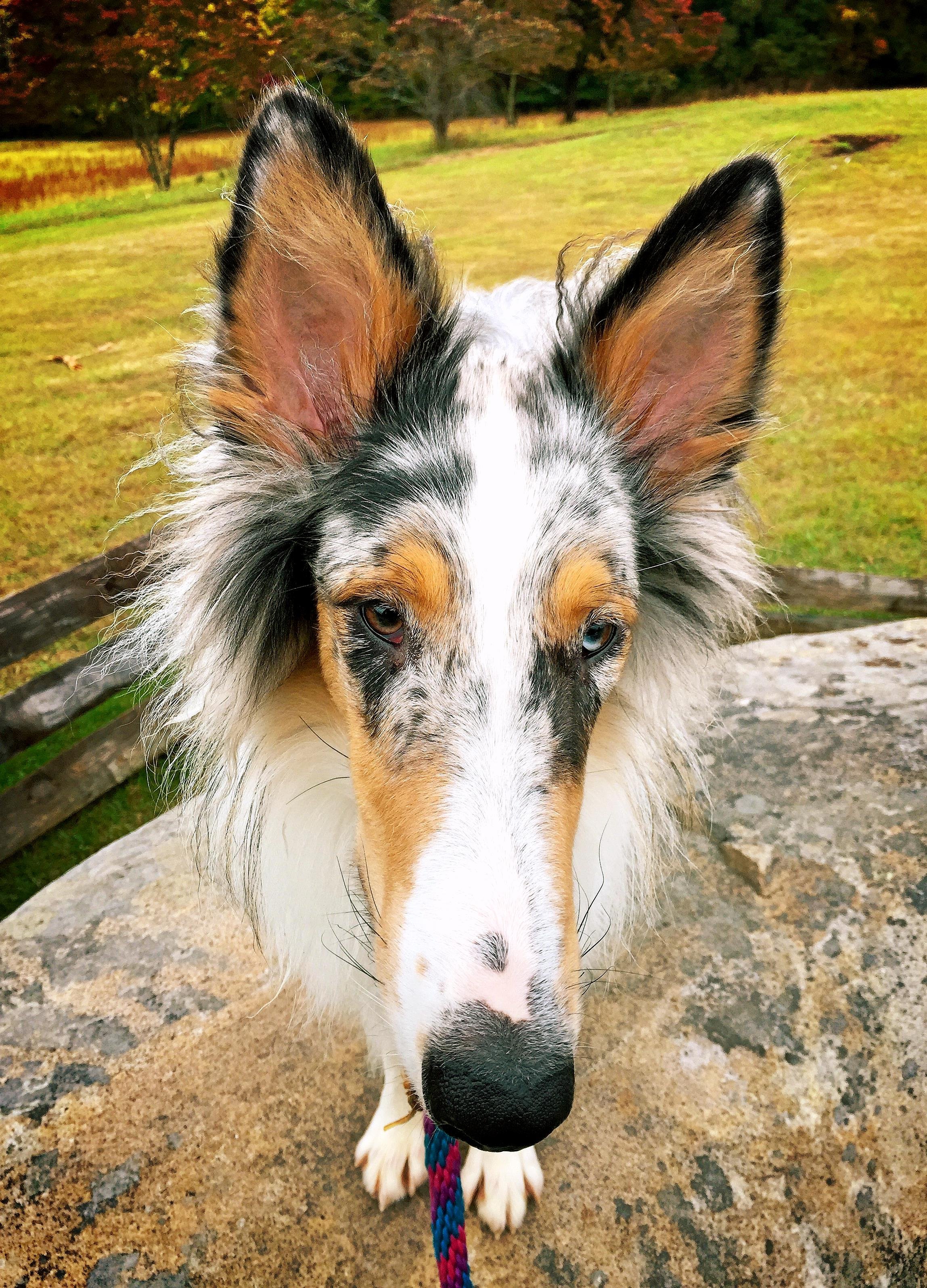
For GRYPHON, my Rough Collie for instance, this could be food but given a chance to play ball is more rewarding for him in active exercises so he would get to do some retrieves with his favorite toy. FIZZGIG is a tugger so when she comes, she loves a chance to tug on her favorite scruffy. LUKA, he is all about the food - he doesn't play much so trying to reward him with the same thing as GRYPHON would not work for him.
Here are some 9wk old foster pups working on the same behavior -
It has to be what is important to them - something they are willing to work for, to get excited about and something that shares our joy with them.

NOTICE WE DID NOT USE THE WORD COME AT ALL HERE

That is because it is easier for a dog to associate a new behavior with a cue word when they are ACTUALLY DOING the behavior than us just repeating it over and over.
Say you were trying to learn a new language and you want the word for walking. You are sitting at a cafe and the person teaching you can explain it several ways:
  • They simply say the word to you over and over while you are sitting at the table. They may give you other body language cues but generally they just say the word to you. It can be very difficult to understand what they want. Asking a dog to COME when they have no idea what that means is the same. You tell them to COME while they stand and look at you and you are creating an association with standing there instead of one with coming to you.
  • The person teaching you gets you moving by either getting you to follow them out of the cafe or leading you gently. Once you start walking - they smile and say YES! and then give you the word for "walking". As you keep walking, they reinforce that is correct by continuing to encourage you and say the word as you are doing the behavior (walking). Much easier isn't it?

SO WHAT'S NEXT?

Once your dog can respond to your sound in a relatively quiet space - you want to start increasing criteria one step at a time. Don't jump from the living room when no one is home to the dog park...that's not fair LOL
Gryphon and I recently played the COME GAME at our local Tractor Supply with a total stranger to him. New environment, new person and he still thought it was the best game ever. If something ever happens and your dog is running loose - wouldn't you rather have them go to a stranger then continue running loose? How many dogs are lost or hit by cars because they just won't go to anyone?
Criteria that you can increase include:
DISTANCE - How far away can you be and they still respond?
DISTRACTION - Different environments, practicing around other pets, kids, inside, outside...
DIVERSITY OF REWARD - Will they recall for a toy instead of food? What about a chance to go on a car ride? What other types of things do they find rewarding?
The basics of this are simple - be that $50 giving new boss you loved to work with above. Recognize effort. Reward success. Pay them well, with things they find valuable and you will have an amazing recall in no time!

Sunday, April 2, 2017

SCOUT Passes his LEVEL 1 Test!


This handsome young man just passed his Level 1 Test including extra credits! He and his family have been working very hard at his training on the way to making him a service dog for his Dad. Great job guys!


He sits his AKC Star Puppy test next week and is now working on both his Level 2s and passing the APDT B.A. level of Canine Life and Social Skills!
Congratulations Scout & the Chasse family.

Friday, March 17, 2017

SERVICE DOG SATURDAY - TASKING SKILLS - PRESSURE THERAPY

WHAT IS PRESSURE THERAPY

Pressure Therapy is one of many helpful tasks a Service Dog can be trained to do to assist their handler with pain, spasms or light mobility issues. It breaks down differently depending on the individual handlers needs. Essentially, it involves a dog applying their body weight in different ways to help with various aspects of their handlers condition.
I see many handlers benefit from this task in so many ways. This can range from acting as a focus for grounding/anxiety to calming muscle spasms or support during seizure activity to learning to apply and shift their weight on specific acupressure points. In my case, my Service Dog in training, Gryphon, is learning 3 types of pressure therapy for assisting with my Fibromyalgia/MS symptoms and Anxiety response.
New Image3.jpg

LPT - Light Pressure Therapy

The dog places a small amount of weight, usually with their foot, head or rear, onto their handler. This small weight is not generally enough to ease physical symptoms but can be very helpful during anxiety attacks, PTSD flashbacks or dissociation. They provide a focus for their handler to use as a grounding point which helps the handler avoid a full blown attack.
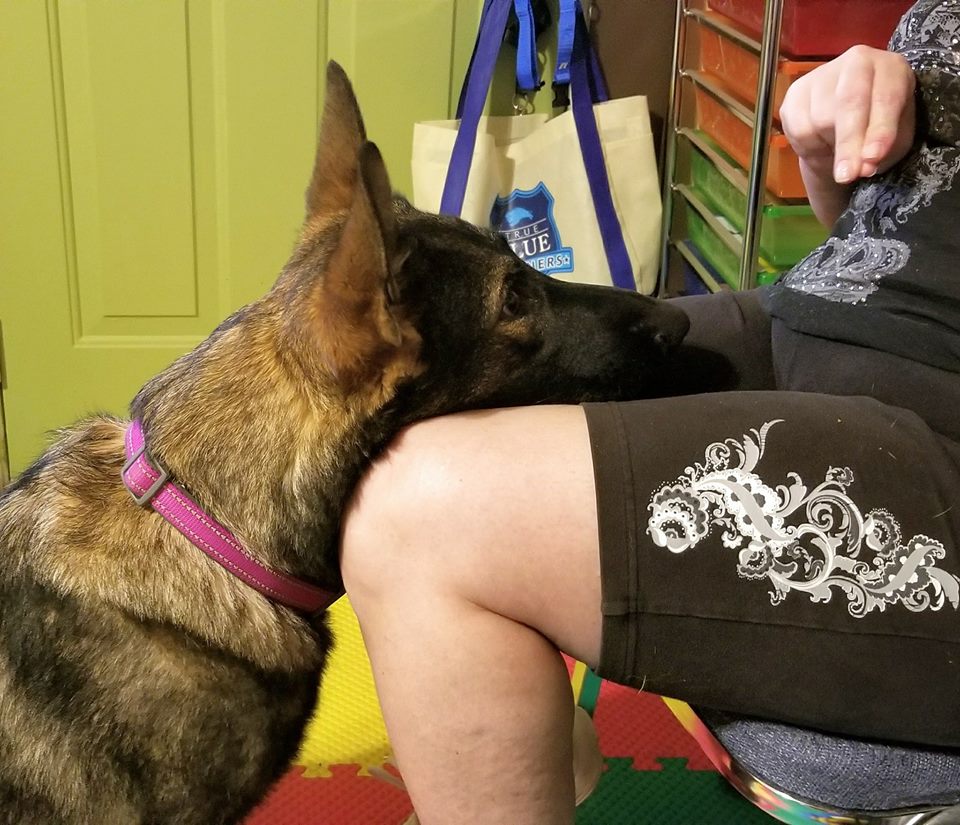
In this instance, the dog is taught to touch the handler with their paw or rest their head across the handlers lap when they notice early signs of distress like an increase in respiration, nervous or agitated behavior or any other cue the handler may have taught them to respond to. This task is not about the weight of the dog, but simply the act of interruption in most cases.
21462716_1748545578537419_1894465659674843531_n.jpg
LUNA, a German Shepherd pup, is learning LPT with her Mom in one of my group classes
This behavior is taught in three stages.
  • Decide WHEN the behavior is needed - when should the dog do this?
    To count as a legal TASK for service work, the skill needs to be a trained response that can be replicated ON CUE - not a natural unshaped behavior.
This is one of the defining differences between Service Dogs and Emotional Support Animals (ESA) that naturally respond but are not trained. Emotional Support Animals provide their disabled handlers with companionship and comfort however as of 2011, ESAs are NOTcovered under current ADA laws which means they are NOT allowed public access to non-pet friendly places like stores, restaurants or similar locations. Only trained Service Dogs are protected under the Americans with Disabilities Act (1990).
  • Decide what cue/body language the dog should respond to - Breathing changes? Foot tapping? Hand clenching?
  • Decide how the dog should respond - for larger dogs, a head across the lap is often used but some dogs sit/stand on their handlers feet, put their paws onto their handler's lap and some small dogs will stand on their handler's chest. All of these are valid responses and it will vary depending on what helps the individual handler the most.

DPT - Deep Pressure Therapy

In this task, the dog places a substantial amount of weight onto their handler, often with large dogs this is at least half of their body. This is a targeted behavior (meaning the dog generally lays across a specific part of the body). The weight of the dog can ease muscle spasms, helps control body movements during seizures, stabilize tremors etc. It has also been paired with certain alerts in which the dog makes the handler remain still until the danger they are alerting to has passed (blood sugar dropping, heartbeat/blood pressure irregularities, vertigo).
Gryph is doing one version of DPT in this video. I had a rough day with muscle spasms and he places his legs and front half of his body over my legs/ hip and then his head over my ribs. Even when I told him he could get up ("Free"), he continued to lay with me. What just looks like a dog snuggling to most people can actually be a very helpful task. He weighs about 75lbs and was probably applying about 30lbs of that weight over my ribs and back, similar to a weighted blanket.

PPT: Pressure Point Therapy

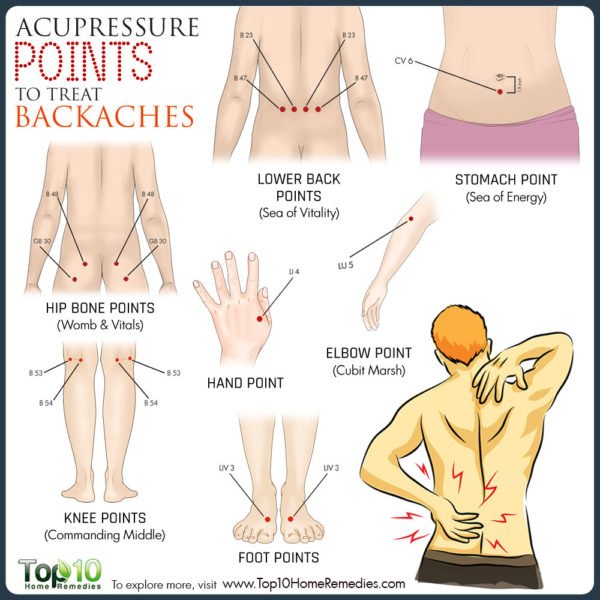
This is a much more complex task we are still working on but essentially involves the dog being taught to target a particular part of the body or pressure point and stand on that point to stop spasms or relieve pain. They are taught to shift their weight for more or less pressure as needed. This involves the dog understanding several complex behaviors and being able to chain them together into one task.
  • Foot Targeting - placing their foot on the spot/mark indicated
  • Stay/Steady - to remain there until asked to move
  • Weight Shift - understanding how to lean in or away as needed to increase or decrease the pressure being applied
So if a handler asks for their dog to provide PPT to their lower back, the dog could be taught to target specific points along the spine and apply pressure until asked to move to another point or move away. Yes, pretty much a canine massage! Not many dogs are currently trained in this but I think it will be very helpful to chronic pain sufferers with conditions such as Fibromyaglia, Lupus, MS or Arthritis.
1-acupressure-points-for-back-600x600.jpg
http://www.top10homeremedies.com/news-facts/important-acupressure-points-back-pain-relief.html

HOW DO YOU EVEN START TRAINING A DOG TO HELP WITH THIS

Many times cost and long waiting lists (which can average 2-5 years in some cases) make it difficult for handlers to get a dog and they decide to begin training their own. While this is certainly allowed, it is a hard road if you aren't working with a good trainer. Less than 30% of dogs who start the journey to becoming a Service Dog succeed. It is physically and mentally taxing work and it takes a lot of patience, perseverance and good training to make it happen.
I have several resources available to help with the process.
Fullscreen capture 10142017 40417 PM.jpg
https://www.facebook.com/groups/329574914180670/
I run a free group on FaceBook that offers training support on everything from Basic Obedience & Manners to Public Access and Tasking Skills.
It is based on a combination of Sue Ailsby's Training Levels (Canadian Service Dog Trainer), C.L.A.S.S (Canine Life and Social Skills), the AKC CGC series of tests and basic PA and tasking skill building.
It is an active working group so I do ask that people participate (there are no deadlines but you can post to the PRACTICE THREAD until you are ready to post the final behavior).
If you don't want to be part of an active group - here are the links just for more info:
SUE AILSBY'S TRAINING LEVELS
http://sue-eh.ca/page24/page26/styled/
APDT C.L.A.S.S (they offer certificates but you don't have to take any tests - you can just do the skills training)
https://mydoghasclass.com/students/
I also offer training support locally (Southern WV/VA) with group classes, private sessions and boarding programs as well as offering an Online Classroom for eLearning.

Saturday, February 18, 2017

DROP IN LEVELS GROUP STARTING SOON!


Want a PAY AS YOU GO training option?  DROP IN GROUPS are the solution!

The TRAINING LEVELS system was designed by Sue Ailsby and has formed the basis for many service, sport, show and companion dogs training.  This DROP IN LEVELS GROUP is based on her old levels system and has 7 levels to work your way through at your own pace.

Behaviors covered combine Obedience, CGC, Tricks & Manners and can be built on for everything from basic house manners to Therapy and Service Dog work.

DROP IN GROUPS are held at the same time and location every week and you come as and when you can.  You pay as you go each time you come.  You work on whatever Level behaviors you are working on at the time with the support of both myself and others who are working through their own training. 

Each level culminates with a test for that Level, which you can earn certificates and prizes for.  While this is a DROP IN system - RSVPs are required as space is limited.  All dogs must be up to date with age appropriate vaccinations or have a current titer test.

PRICING
1 HOUR Session $20
2 HOUR Session $35 (SAVE $5/session)

More info about this group can be found here:

UPCOMING GROUP CLASS


Want to take a group class with your puppy or dog?  The next one is scheduled for March 16th at Tractor Supply in Bluefield, WV.  Class is limited to 4 teams so be sure to register early to secure your space!

WALK IN CANINE GOOD CITIZEN TESTING


Is your dog ready to take their CGC, CGCA or CGCU test?  Join me at Tractor Supply in Bluefield, WV on the first Thursday of every month for Walk In Testing!

Tuesday, February 14, 2017

PRODUCTS ARE ARRIVING!


I now have the following products for sale:

FOAM HANDLE TARGET STICKS [top left] - extend to 4' long - comes in Blue, Red, Green & Yellow -$5.00
CLICKER HANDLE TARGET STICK [bottom right] - extends to 13" - $7.00

(Not sure what they are for - read about it here:
http://thinkpaws.blogspot.com/2017/01/targeting-what-is-target-stick-part-1.html)

RECEPTION DESK POTTY BELL [bottom middle] - great for dogs that use their paws - comes in Black or Pink base - $4.00
Shopkeeper Bells for more Nose inclined dogs are on the way!


DOGZILLA TREAT POD MEDIUM FEEDING TOY [middle left] - excellent, rugged toy that is used just like a KONG - $8.00

MINI YUMZIES TRAINING TREATS [main image] - BBQ Chicken, Hickory Bacon, Cheese & Peanut Butter flavors - 5oz bag - $5.00

ZUKES MINI TRAINING TREATS [bottom left] - Savory Salmon, Wild Rabbit & Super Berry flavors - 6oz bags - $6.00

NOW AVAILABLE FOR SALE - CLICKER OPTIONS


I usually use a combination of the first two items:
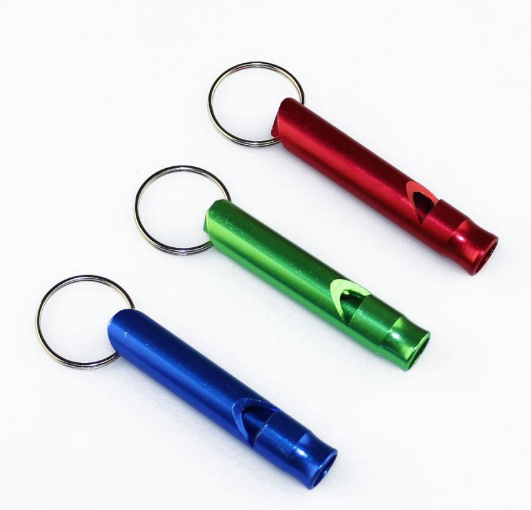
PIPE WHISTLE [great for recall work] - $2.00
DOG TRAINING CLICKER w/ WRIST STRAP [Blue Only] - $2.00

COMBO CLICKER w/ INBUILT WHISTLE - $4.00
ON SALE UNTIL FEB 28th - $2.00

INSECT CLICKER - 3 PACK - $4.00
Great for shy or nervous dogs, much quieter click

BUY ANY OF THESE HERE:
http://www.thinkpawsitivepup.com/p/training-resources.html

Saturday, January 28, 2017

PRODUCT REVIEW - KUUK Vegetable Chopper (for cutting dog roll into training treats)

My first official product review!  I saw on Facebook someone was using an onion chopper/vegetable dicer to cut dog roll into training treats...brilliant!  For anyone who has trouble with their hands like me, or just wants a faster, easier and less messy way to cut the dog roll down - this is your answer!


Saturday, January 21, 2017

USING GO TO MAT TO STOP DOOR DASHING AND TEACH APPROPRIATE GREETINGS

GO TO MAT / PLATFORM WORK is a skill I think every dog should have.

It stops so many issues in their tracks and literally saves dogs lives.  If your dog reliably knows how to go to their place (I recommend a raised bed of some sort) - you can change so many behaviors:

Gorgeous Giant Schnauzer pup - SIRIUS - practicing on his mini trampoline
* No more door dashing
* No more jumping on guests when they arrive
* No more going crazy at the sound of the doorbell / mailman / delivery drivers
* No more begging at the table
* No more chasing the cats
* Makes teaching Wait/Stay much easier
* Teaches impulse control and patience

Rocky rocking out his matwork!

Pups are never too young to learn and it is easy and fun to teach.  That gorgeous pup there is Rocky who is staying with me for my STAY & LEARN HEADSTART program.

Here is a look at his most recent training footage for his family (not a how to video).  It is all about choice - and having fun which you can see he is!


You can pair the behavior of going to the mat/bed/spot with a sound that may be triggering behaviors you don't want. Miss Luna did really well with her first attempts at learning to Go To Mat when she heard a knocking sound.

This is a great way to teach excited dogs an alternate behavior for when company comes over.  We are also using it to curtail her desire to rush out the door after the kitties when they are being fed.

I love these particular Pet Cots - easy to put together, washable covers and
durable as long as you don't leave them to be chewed on...LOL
Here is ONYX, a Lab pup working on learning to Stay while toys are being thrown around for distraction.  When they can master this - they really can master changing any of the above mentioned behaviors!


Not sure where to start - join me in my ONLINE CLASSROOM for a 4 wk FASTRAK FOCUS course on this or as part of many of the other classes offered there.

SAMPLES ARE ARRIVING!


When Tractor Supply and I started working together to offer local group classes, I reached out to several pet food/treat vendors to see if they wanted to provide samples for our group Swag Bags and the response has been wonderful.  There is nothing like coming home to see packages waiting for you!  A full thank you list is coming!

Tuesday, January 17, 2017

TARGETING - WHAT IS A TARGET STICK? (PART 1 of 3)


Target sticks are a tool that many trainers use - and not just for dogs.   Horses, cats, birds, dolphins, seals and even fish can be taught with a target stick.

SO WHAT IS IT?
For this purpose of this discussion - I am referencing a stick of some sort that has a distinctive end which you want your dog to touch with their nose.  They come in extendable varieties, some with clickers built in and can even be made from something as simple as a chopstick and styrofoam ball.  Or heck, you can just use a wooden spoon.

Here are just a few of the ones I have stored up - a plastic children's baton, a bit of wooden dowel with chair leg caps on it and a teachers toy I found one year at Target.


I have used (and really like) Terry Ryan's Clik Stik with the built in clicker but they are pricey (ranging from $14-$25 depending on where you find them) so I started looking for other options.


My new target sticks arrived last week and I really like their potential. They have a nice sized foam handle - especially good for kids or people with difficulty in their hands and they extend out to 4 feet.

The tip is small but if someone wants to start with a larger size ball on the end and then decrease the size - I use styrofoam craft balls for that.


Dogs haven't minded touching the styrofoam but the texture seems to keep young ones (or mouthy older pups) from trying to bite them. [Of course, use common safety means when working with pups and styrofoam.]  I have these for sale for $6 (plus shipping if I can't deliver to you)

I have another type coming with clickers built into the handle (similar in idea to the Click Stik but very different in design) so we'll see how they compare.  They look good...I have only ordered 3 to start and once they arrive (if they are good quality) I will have them for $12 (plus shipping if I can't deliver)

**I really need to get some product reviews underway for these new items coming in**

Have you ever used a target stick?  What behaviors did you teach with it? Comment below to share with us!

Thursday, January 12, 2017

"ALPHA DOG" AND ALL THAT JAZZ....

I love discussing training... Especially from the science behind operant conditioning standpoint... But I think it helps to clarify what we are talking especially in terms of "+R",  purely positive and balanced methods.

Just because I am a positive reinforcement trainer (+R) does not mean my dogs don't have guidelines to live by or I never tell them "No" -  this does class me as not "purely positive" however.  For their safety,  desire for routine and basic sanity - of course there are rules.

But here is the key difference for me. My entire goal in training is to identify and reward when they are doing something right, whether that means I see them doing it and acknowledge it (Capturing) or whether it means I set them up to be successful through a training exercise that I can reward with any of the FAB 5 key reinforcers (food, toys, praise, affection or access to resources). What I don't do is wait for my dog to make a mistake to then give a correction.

If you look at the example on the chart about loose leash walking that explains it pretty well.  Below are my thoughts on this... and like opinions on everything else , I am not saying I'm right I just wanted to really explain the difference for me between my style of training and what some are calling Alpha/Pack training...


Alpha/Pack Theory Training:
"My dog is pulling me on the leash when we walk and we go out of doors.  This means he does not respect my authority. He wants to be in charge. That's why he tries to walk in front of me,  run down the stairs in front of me, or burst out of the door. 

I'm going to stop this behavior by proving that I am Top Dog/Alpha.   I do this by making sure that he never walks in front of me, doesn't ever go out the door before me,  I eat before him etc etc... If he does pull me or walk in front of me,  I will correct his behavior by (insert training tool or correction here). 

Once he respects my authority and moves to a Beta or Omega roll,  he will no longer challenge me and will therefore walk on a loose leash beside of or behind me."

(I do not agree with this theory,  as explained, for many reasons that I am happy to discuss... I think what people are seeing and how they're explaining it is inaccurate. I'm not saying that using these steps to correct the problem don't work,  I'm saying I don't think people actually understand what's going on)

My Training Theory:
This dog is pulling me and can't focus. Instead of correcting my dog because he is pulling, I need to teach my dog where to be so that he doesn't pull in the first place.

I teach loose leash walking completely off leash in the beginning so that the leash is simply a safety strap between me and the dog. It's not a tug-of-war, it's not a battle of wills, it's not who is stronger, smarter, more dominant - it is about making sure that the dog understands what we want before we start correcting them for something that they don't necessarily understand.

More than one person has said to me:  "Oh they know what they're supposed to be doing - they just choose not to do it."

And maybe that's the case. But then why would they choose not to do it?

Because there's something more interesting / distracting? Then you haven't worked enough on proofing around distractions...

Because they're being spiteful / want to rule the world? Doubtful...

So what do you do when they don't do what you ask them to do?
I always go back and evaluate my clarity in the situation.

Have I taught them in enough variables such as location, around different distractions, with different durations etc in order to be sure that they know exactly what I'm asking for when I asked for it?

You can't take a dog who just learned SIT at home, in the kitchen floor without distraction and expect that same dog to SIT the first time you ask them to outside with cars going by and squirrels running up a tree and think "But they know that!"

It doesn't work that way, dogs do not generalize in the same way that people do.  In this instance, in my opinion, the fault lies on me as a trainer. I have not provided my dog with enough information to know that the behavior is expected to be the same inside the house, in one certain room with no distractions, as it is outside with a tremendous amount of environmental distraction.  Being inexperienced in a certain situation and "giving attitude" is not the same thing.


You are not a dog. Your dogs know that you're not a dog.  They do not see you as their "Superior" because that's comparing apples and oranges.

Can they recognize that you are the giver or the taker away of resources? Absolutely!

Is this a sign of "respect"? - That's anthropomorphizing...
Can you lead your dog without being a "pack leader"?  Absolutely!  Leadership comes in many forms and having a dog that looks to you when uncertain or for direction in a given situation - that's a key form of leadership.

However trying to compare dogs to wolves, especially captive wolves, is just inaccurate and then putting humans in the dog equation is the same as putting chimpanzees and humans together and saying that it's all the same thing. 

It just doesn't work that way... and I think a large part of the problem is terminology.

We could be saying the exact same thing and someone uses a certain phrase to explain what they're doing and that becomes either a trigger or a clichéd catchphrase and what they're actually doing gets lost in the terminology.

I would love to open a dialogue about how you train, and how you think the dog processes that information. Let's use Loose Leash Walking as an example since this is something that many people have struggled with.  Does your dog walk on a loose leash?  How did you train it?  How do you think your dog learned it - as in what do you think you did and how did they process that information?

Comment below - I'd love to hear your view.

Sunday, January 8, 2017

HIGH VALUE TREAT MIX

Tired of buying expensive treats only to find your dog doesn't really like them?  Just want to make sure you know exactly what is in what you're giving them?

Training utilizes many rewards - toys, play, praise, access to resources - and of course food.  And just like you probably wouldn't wash someones car for 25¢ but might for $25 - dogs have a PAY SCALE as well.  I love Lili Chin's Boogie Pay Scale graphic - it explains it well!


I started making my guys high value mixes when I saw one of our local supermarkets had chicken quarters on sale for 49¢ / lb.  This is a great mix for them.


Don't want all the work?  My guys also love the NATURAL BALANCE and PURE BALANCE dog rolls cut into cubes!  At PETCO classes we called it our Puppy Crack!


Friday, January 6, 2017

CGC TEST VIDEO EXAMPLE


Here is a great short video showing exactly what the CGC test entails - if you are considering getting this certification with your dog - this should help clear up any concerns!


Remember - Walk In Testing is available on the first Thursday of every month and CGC classes run on a regular basis.  Just ask for more details!


Thursday, January 5, 2017

NEW TRAINING SUPPLY PACKS HAVE ARRIVED!!!

During our sessions it is almost guaranteed I will mention something product or book wise that you will want to follow up on - no problem - they are all on my SHOP page. But this year I have also added training supply packs for your convenience - everything you need all in one place.

What size pack is right for you? 

That really depends on how far you are going with your training.  The Woof & Wag Pack covers all your basics but if you plan on doing more advanced work like Platform or Mat training, advanced targeting and more Distance & Distraction work - then the Totally PAWsome Pack is the answer.


TEACHING A DOG A SUSTAINED HAND TARGET

This are great follow ups to your TOUCH cue.


Why would I want to use a sustained hand target?  

Anything that helps you keep your dog still can be made useful with a sustained touch.  It can make grooming like ear and eye cleaning easier, medical treatment including vaccinations and the ever dreaded rectal temperature taking easier (your vet will LOVE you) and it teaches IMPULSE CONTROL which is important for so many behaviors...

Great!  So how do I start to getting them to extend the length of time they are touching my hand?

It just so happens we have 2 brilliant guest videos to share with you - have a look!


Wednesday, January 4, 2017

WHY MY DOGS DON'T KNOW "NO!"

Article Source: Four Feet & Food

A friend and I were recently walking out my front door while my dog, Kona, was close at our heels. She turned around and told him “no”. I told her that word means nothing to him and asked him to “back up” instead (a behavior he knows well). This sparked the conversation of “you’re a dog trainer, how does your dog not understand the word ‘no’?” My simple answer is “because he’s never been taught what that means”.

Dogs are not born with an inherent knowledge of the human language or culture. Can they learn a word by the context in which it is delivered? You bet! But it’s up to us to attach some useful information to that word to help them navigate our world where we expect them to live within our expectations. If I yelled “no!” at Kona in a stern tone would he immediately stop what he was doing? He might stop in that instant but what is he supposed to do after that? It’s not really fair for me to tell him to stop doing something without providing any follow up information.

How many of us have had this conversation with our significant other:

You: What do you want for dinner? 
SO: I don’t know. What do you want? 

You: How about Chinese food? 
SO: No. 

You: Ok, how about Mexican? 
SO: No. 
You: Then why don’t YOU pick something! 

It’s frustrating when someone tells you “no” without providing an alternative isn’t it? Without any additional information you don’t know what to do next. Is he/she saying “no” to Chinese food because they aren’t hungry or because they don’t like Chinese? Did they just eat Mexican for lunch and don’t want it again for dinner? WHAT DOES IT MEAN?? Without any additional information you have no idea what to do next! It’s the same for our dogs. “No” doesn’t hold any weight unless you’ve associated a meaning to it for a specific behavior.

It is very common for us humans to think “no” can be just a blanket term for “stop what you’re doing this instant” (and don’t do it again) but in reality, most dogs have no idea what that means and are just responding to the tone of our voices. I have taught my dogs many useful behaviors that are all on cue, meaning they have a word or signal attached to them. I have taught them to problem solve and to respond to my cues. I taught them all of this through positive reinforcement training based on mutual trust and respect.

I have never had the need to teach my dogs “no” because it has no use in our relationship. Do my dogs do things on occasion that I might not like? Of course! But that’s where the other behaviors they know come into play. I will discuss some alternate behaviors you can teach to prevent unwanted behaviors in a follow up post. In the meantime, if anyone has a solution to the ongoing “what do you want for dinner?” debate with your SO, please share in the comments!