Showing posts with label emotional support animal. Show all posts

Friday, March 17, 2017

SERVICE DOG SATURDAY - TASKING SKILLS - PRESSURE THERAPY

WHAT IS PRESSURE THERAPY

Pressure Therapy is one of many helpful tasks a Service Dog can be trained to do to assist their handler with pain, spasms or light mobility issues. It breaks down differently depending on the individual handlers needs. Essentially, it involves a dog applying their body weight in different ways to help with various aspects of their handlers condition.
I see many handlers benefit from this task in so many ways. This can range from acting as a focus for grounding/anxiety to calming muscle spasms or support during seizure activity to learning to apply and shift their weight on specific acupressure points. In my case, my Service Dog in training, Gryphon, is learning 3 types of pressure therapy for assisting with my Fibromyalgia/MS symptoms and Anxiety response.
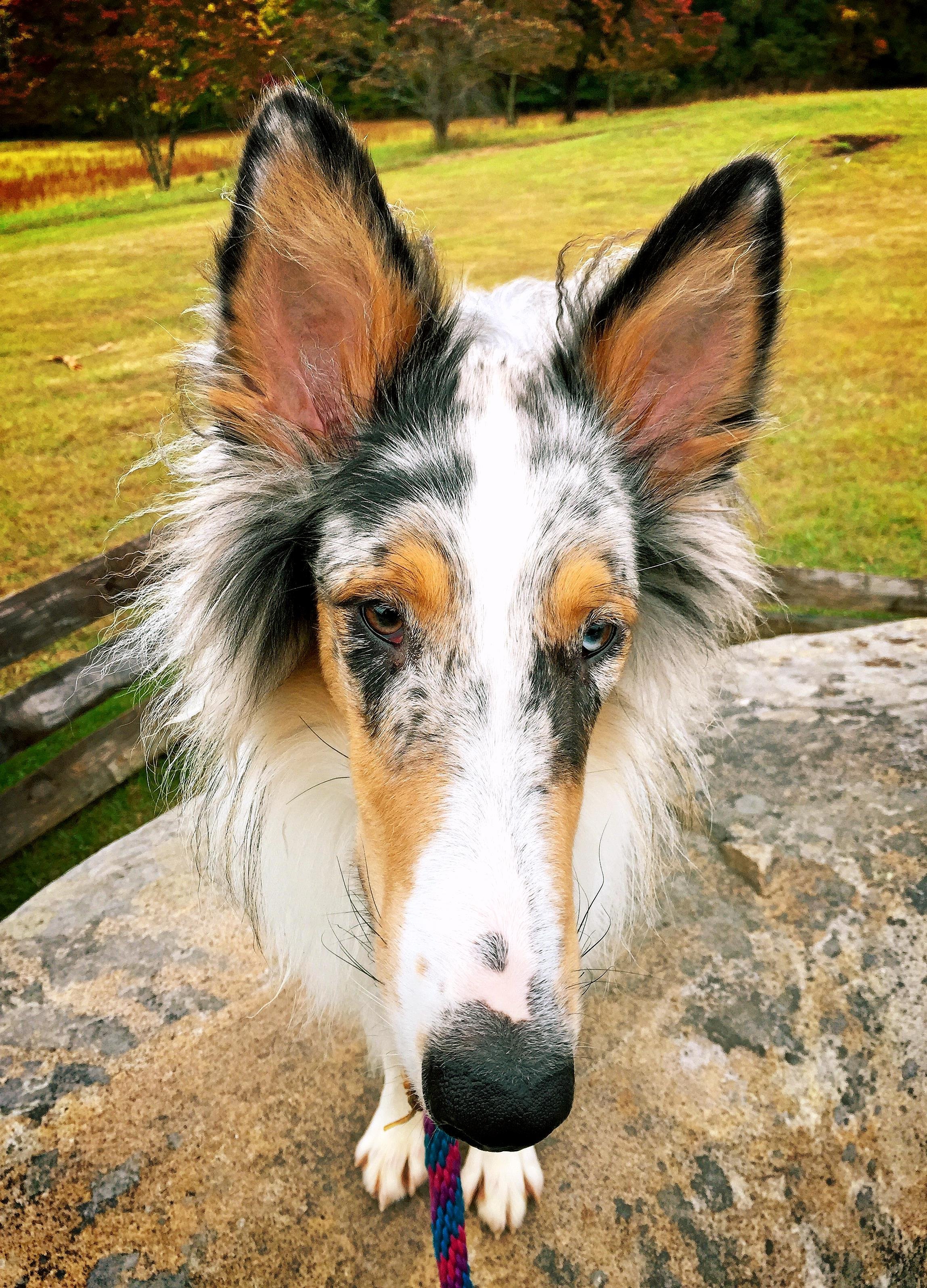
New Image3.jpg

LPT - Light Pressure Therapy

The dog places a small amount of weight, usually with their foot, head or rear, onto their handler. This small weight is not generally enough to ease physical symptoms but can be very helpful during anxiety attacks, PTSD flashbacks or dissociation. They provide a focus for their handler to use as a grounding point which helps the handler avoid a full blown attack.
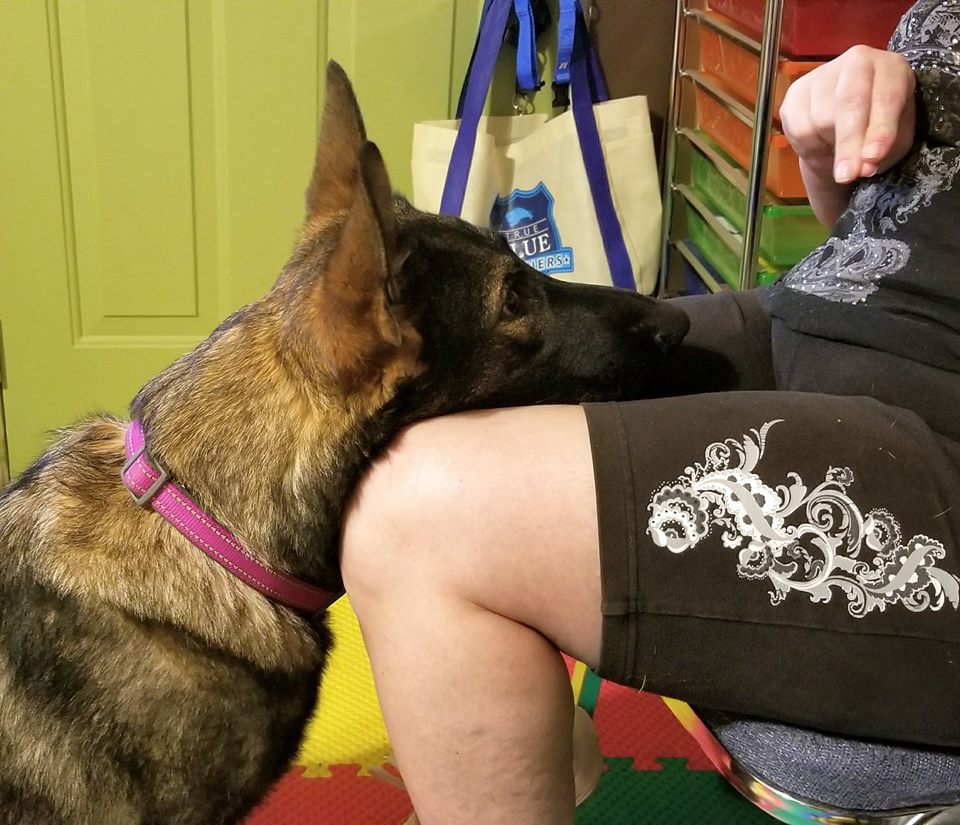
In this instance, the dog is taught to touch the handler with their paw or rest their head across the handlers lap when they notice early signs of distress like an increase in respiration, nervous or agitated behavior or any other cue the handler may have taught them to respond to. This task is not about the weight of the dog, but simply the act of interruption in most cases.
21462716_1748545578537419_1894465659674843531_n.jpg
LUNA, a German Shepherd pup, is learning LPT with her Mom in one of my group classes
This behavior is taught in three stages.
  • Decide WHEN the behavior is needed - when should the dog do this?
    To count as a legal TASK for service work, the skill needs to be a trained response that can be replicated ON CUE - not a natural unshaped behavior.
This is one of the defining differences between Service Dogs and Emotional Support Animals (ESA) that naturally respond but are not trained. Emotional Support Animals provide their disabled handlers with companionship and comfort however as of 2011, ESAs are NOTcovered under current ADA laws which means they are NOT allowed public access to non-pet friendly places like stores, restaurants or similar locations. Only trained Service Dogs are protected under the Americans with Disabilities Act (1990).
  • Decide what cue/body language the dog should respond to - Breathing changes? Foot tapping? Hand clenching?
  • Decide how the dog should respond - for larger dogs, a head across the lap is often used but some dogs sit/stand on their handlers feet, put their paws onto their handler's lap and some small dogs will stand on their handler's chest. All of these are valid responses and it will vary depending on what helps the individual handler the most.

DPT - Deep Pressure Therapy

In this task, the dog places a substantial amount of weight onto their handler, often with large dogs this is at least half of their body. This is a targeted behavior (meaning the dog generally lays across a specific part of the body). The weight of the dog can ease muscle spasms, helps control body movements during seizures, stabilize tremors etc. It has also been paired with certain alerts in which the dog makes the handler remain still until the danger they are alerting to has passed (blood sugar dropping, heartbeat/blood pressure irregularities, vertigo).
Gryph is doing one version of DPT in this video. I had a rough day with muscle spasms and he places his legs and front half of his body over my legs/ hip and then his head over my ribs. Even when I told him he could get up ("Free"), he continued to lay with me. What just looks like a dog snuggling to most people can actually be a very helpful task. He weighs about 75lbs and was probably applying about 30lbs of that weight over my ribs and back, similar to a weighted blanket.

PPT: Pressure Point Therapy

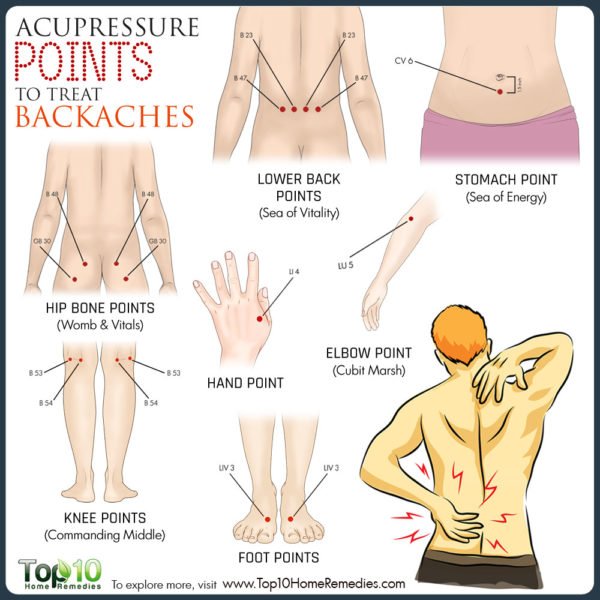
This is a much more complex task we are still working on but essentially involves the dog being taught to target a particular part of the body or pressure point and stand on that point to stop spasms or relieve pain. They are taught to shift their weight for more or less pressure as needed. This involves the dog understanding several complex behaviors and being able to chain them together into one task.
  • Foot Targeting - placing their foot on the spot/mark indicated
  • Stay/Steady - to remain there until asked to move
  • Weight Shift - understanding how to lean in or away as needed to increase or decrease the pressure being applied
So if a handler asks for their dog to provide PPT to their lower back, the dog could be taught to target specific points along the spine and apply pressure until asked to move to another point or move away. Yes, pretty much a canine massage! Not many dogs are currently trained in this but I think it will be very helpful to chronic pain sufferers with conditions such as Fibromyaglia, Lupus, MS or Arthritis.
1-acupressure-points-for-back-600x600.jpg
http://www.top10homeremedies.com/news-facts/important-acupressure-points-back-pain-relief.html

HOW DO YOU EVEN START TRAINING A DOG TO HELP WITH THIS

Many times cost and long waiting lists (which can average 2-5 years in some cases) make it difficult for handlers to get a dog and they decide to begin training their own. While this is certainly allowed, it is a hard road if you aren't working with a good trainer. Less than 30% of dogs who start the journey to becoming a Service Dog succeed. It is physically and mentally taxing work and it takes a lot of patience, perseverance and good training to make it happen.
I have several resources available to help with the process.

Fullscreen capture 10142017 40417 PM.jpg
https://www.facebook.com/groups/329574914180670/
I run a free group on FaceBook that offers training support on everything from Basic Obedience & Manners to Public Access and Tasking Skills.
It is based on a combination of Sue Ailsby's Training Levels (Canadian Service Dog Trainer), C.L.A.S.S (Canine Life and Social Skills), the AKC CGC series of tests and basic PA and tasking skill building.
It is an active working group so I do ask that people participate (there are no deadlines but you can post to the PRACTICE THREAD until you are ready to post the final behavior).
If you don't want to be part of an active group - here are the links just for more info:
SUE AILSBY'S TRAINING LEVELS
http://sue-eh.ca/page24/page26/styled/
APDT C.L.A.S.S (they offer certificates but you don't have to take any tests - you can just do the skills training)
https://mydoghasclass.com/students/
I also offer training support locally (Southern WV/VA) with group classes, private sessions and boarding programs as well as offering an Online Classroom for eLearning.

Wednesday, February 15, 2017

BUSINESS EDUCATION SEMINARS ARE HERE!


Are you a business owner or manager?  Do you know the difference between a Service Dog, Therapy Dog and Emotional Support Dog?  Do you know only ONE of these is granted public access privileges when accompanying their disabled handler?  Do you know about the SCAM registries for "certification"?

Do you know the current laws regarding service dogs?  Do you know the 2 questions you are ALLOWED to ask?  Do you know when it is within your RIGHTS to deny access or ask for a dog to be removed? Are you willing to risk you, or a staff member representing you, getting it wrong and possibly facing not only bad press but court proceedings and fines?

All businesses open to the general public must follow the ADA (Americans with Disabilities Act) regardless of OSHA rules, health/sanitation laws, fear of dogs or allergies.  States can add additional statutes that you must be aware of in regards to Service Dogs in Training and what allowances they have.

We understand how difficult it is for you to know what to do regarding dogs in your business - especially when their handlers are becoming irate or threatening legal action.

Our Business Resource Packs provide everything from staff training kits to store signage.


Want to make sure you are 2017 compliant with Service Dog laws?  I offer 3 options for Business Education seminars.

IN-HOUSE SEMINAR - $149
* 1hr seminar for you and your staff held between 9am - 9pm (by appointment)
* Prerecorded Webinar available at any time for new staff
* Includes ADA compliant Store Signage and Staff Training Information Packs
* Online (Facebook/Email) or phone support
* Held at your place of business for the following locations:


GROUP SEMINAR - $99
* 1hr seminar for up to 30 business representatives per location
* Prerecorded Webinar available at any time for new staff
* Includes ADA compliant Store Signage and Staff Training Information Packs
* Online (Facebook/Email) or phone support

Held in the following cities:

  • Charleston, WV
  • Beckley, WV
  • Princeton/Bluefield, WV
  • Wytheville, VA
  • Blacksburg/Christiansburg, VA
  • Roanoke, VA


ONLINE SEMINAR - $69
* 1hr Prerecorded Webinar available at any time
* Digital copies of ADA compliant Store Signage and Staff Training Information Packs
* Online (Facebook/email) support

SERVICE DOG HANDLER ACCESS CHALLENGE PACKS NOW AVAILABLE!

Federal and State laws can and do vary and as Service Dog handlers are covered by the law that affords them the greatest protection - there may be exceptions in your state for anything from the type of animal allowed to whether Owner Trained / Service Dogs in Training are given access to the same privileges.

I make sure you have the most up to date information from both Federal and State law, with credible/referable resources.  You do not have to worry about getting into a sticky situation and not knowing your rights! 

My Access Challenge Packs give you everything you need to make access easier for you and your service dog.


ACCESS CHALLENGE PACK - $69
* 50 Access Allowed Translation Cards
* 50 ADA Law Cards
* 25 Service Dog Etiquette Cards
* 25 Non-Verbal Response Cards
* 25 Small Business Primer Booklets
* 10 Emergency Personnel / First Responders Info Cards
* DO NOT SEPARATE FROM HANDLER / SERVICE DOG ON BOARD 4"x4"Car Window Decal

* Reasonable Accommodation Request Letter - Employment 
* Reasonable Accommodation Request Letter - Housing
* Medical Necessity Request Letter

* Top 10 SCAM Registries Information Sheet for Businesses

Saturday, January 7, 2017

SERVICE DOGS vs THERAPY DOGS vs EMOTIONAL SUPPORT DOGS

Do you know the difference between Emotional Support Animals (ESAs), Therapy & Service Dogs?  There is a lot of misinformation and scams out there - be careful!


EMOTIONAL SUPPORT ANIMAL (ESA)

DEFINITION:  A companion animal that provides emotional support to a handler who has been diagnosed with a verifiable mental or psychological disability and has been prescribed an ESA, by their mental health professional, as being needed to assist with daily living.  Just knowing you are anxious or depressed DOES NOT mean you qualify for an ESA.

TRAINING REQUIRED:  No training is required

PUBLIC ACCESS PRIVILEGES:  NONE - they are not allowed in non-pet friendly places.
HOUSING:  You can apply for reasonable accommodation in no-pet housing under the Fair Housing Amendments Act of 1988 or Section 504 of the Rehabilitation Act of 1973, depending on which applies to your situation.  Having an animal declared an ESA DOES NOT guarantee they will be allowed in all housing.
TRAVEL:  ESAs may also travel with you on flights (no other form of transportation) if they meet the requirements as laid out in the Air Carrier Access Act (ACAA).

ADA law does NOT apply to housing or air travel. 


-----------------------------------------------------------------------------------

THERAPY ANIMAL  

DEFINITION:  A working animal that provides emotional support to a number of people through therapeutic visitation, assisting in trauma counselling, providing support in courtrooms for victims (especially children) who need to give a statement or testify, encourage physical therapy activity and assist in confidence with reading skills .

TRAINING REQUIRED:  Extensive training in Obedience and Manners

PUBLIC ACCESS PRIVILEGES:  AS INVITED - Once a dog is certified through the organization they are going to work with (and therefore covered under their liability insurance), they are allowed in places such as hospitals, schools, rehabilitation centers and nursing homes upon invitation of the business or group.

We train to the standards set out by Therapy Dogs International (TDI), Delta Society/Pet Partners and Love on a Leash. (see more about the PAWsitive Hearts Therapy Program here)

-----------------------------------------------------------------------------------

SERVICE ANIMAL 

DEFINITION:  A working animal (dog or miniature horse) that has been individually trained to assist their handler with a legally diagnosed disability.  The task(s) performed by the dog must be directly related to the person's disability.

TRAINING REQUIRED:  Extensive work in Obedience and Manners, Public Access and Task Training

PUBLIC ACCESS PRIVILEGES:  FULL - All handlers of a trained service animal are granted full access rights to have that animal accompany them.  (The animals themselves do not have rights - it is the handler).  Some states extend that to Service Dogs in Training as well but it does vary from state to state.

Handlers and their service animals must be allowed access to anywhere that the general public is allowed, that their presence would not fundamentally alter the course of the business.  There are still exceptions to where a dog must be allowed such as sterile medical environments/burn units, private homes, private clubs, food preparation areas the public has no access to, places like federal agencies and religious institutions that are exempt from ADA law.


And YES you can be asked to leave if your service animal is not housebroken and under control (including excessive barking/whining, aggressive actions, disrupting other patrons of the business etc).

"Under control also means that a service animal should not be allowed to bark repeatedly in a lecture hall, theater, library, or other quiet place. However, if a dog barks just once, or barks because someone has provoked it, this would not mean that the dog is out of control."

Regardless of all the sites advertising "Take your dog everywhere!" - only SERVICE DOGS trained to assist their legally DISABLED handler are allowed in non pet-friendly places.

In 2011, the laws changed to specifically state that assistance animals that provide comfort or a calming influence to their handlers by their mere presence - while helpful indeed - are NO LONGER GRANTED PUBLIC ACCESS PRIVILEGES.  
SCREENSHOT DIRECT FROM THE LATEST 2015 ADA FAQ

The only thing registering your pet as an Emotional Support Dog does is put you on that companies registry.  People have registered everything from paper clips to plastic dinosaur toys to prove that there is NO regulation behind this and it is just a money making business.

SCREENSHOT DIRECT FROM THE LATEST 2015 ADA FAQ
REGISTRATION HAS NO LEGAL STANDING whatsoever and using it to gain access to public places when your dog is not a service animal as defined by the ADA - can in an increasing number of states actually lead to fines or legal action for essentially claiming your pet is a service dog when they are not.


MORE INFO CAN BE FOUND HERE
Make sure whatever source you are using for your information is based directly off of the applicable laws and not a source of opinion or a website trying to sell you anything.